Category Archives: Sports

World Cup 2026 Final: Match Preview, Kickoff Time, and How to Watch

After more than a month of action across the United States, Mexico, and Canada, the World Cup 2026 comes down to one final match. Two nations, ninety minutes (plus stoppage and possibly extra time), and a chance to lift the most coveted trophy in sports.

Where and When

The final is set to be played at MetLife Stadium in East Rutherford, New Jersey, the largest venue of the tournament. It caps off a historic first-ever World Cup jointly hosted by three nations, with the biggest stage saved for the New York/New Jersey area.

Golden trophy placed on green grass near a soccer goal
Pexels / Free to use

The Road to the Final

Both finalists survived an expanded 48-team field, a group stage, a new Round of 32, and three more rounds of knockout football to reach this point. Expect two squads that have shown depth, resilience, and the tactical discipline needed to win seven matches in a row.

How to Watch

As with every match of the tournament, the final will be broadcast on major sports networks and streaming platforms across all three host countries, with worldwide coverage reaching billions of viewers. Kickoff time will be set for prime viewing across multiple time zones.

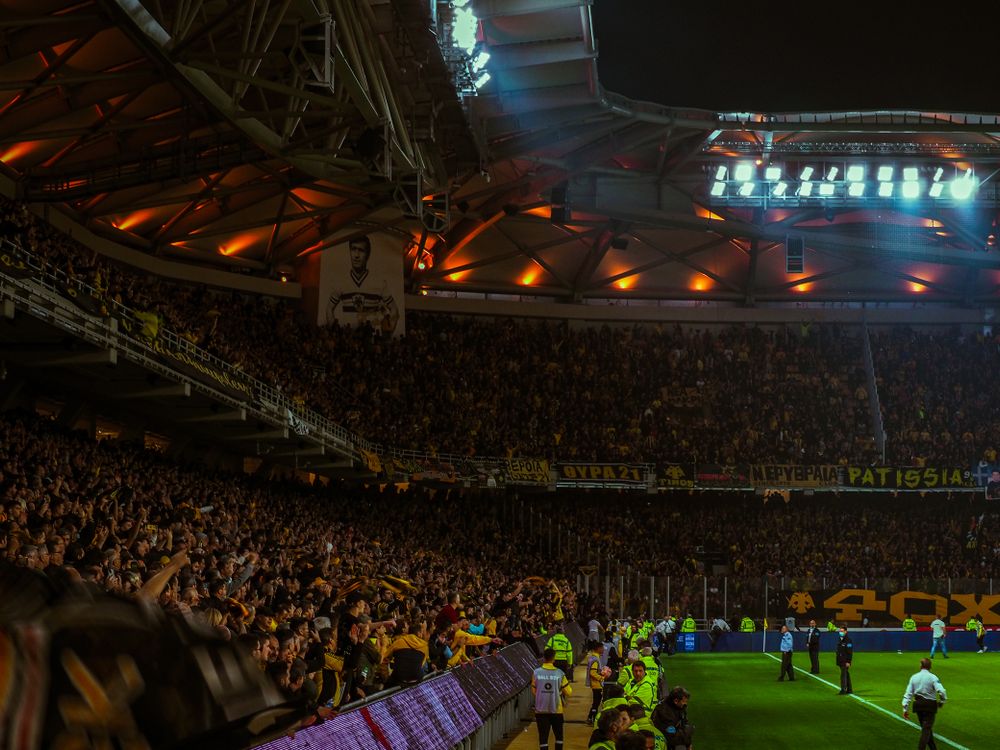
Packed soccer stadium with enthusiastic fans waving flags
Pexels / Free to use
  • Venue: MetLife Stadium, New Jersey
  • Final match of the expanded 48-team format
  • Caps a historic three-nation hosted tournament
  • Broadcast live across the United States, Mexico, and Canada

Images used in this article are sourced from Pexels and are free to use under the Pexels License. Match details reflect the tournament as it is currently being played and may be subject to official updates.


World Cup 2026 Third-Place Match: Preview, Storylines, and Kickoff Details

The World Cup 2026 has reached its final week, and before the champion is crowned, the two semifinal losers meet for the third-place playoff. It is a match that often gets overshadowed by the final, but it still carries pride, history, and a bronze medal on the line.

Why the Third-Place Match Still Matters

For the two teams involved, the third-place match is a chance to end the tournament on a high note rather than dwelling on a heartbreaking semifinal exit. Coaches often use the game to give squad players and backups a rare chance on the biggest stage, while veteran stars use it as one final opportunity to add to their World Cup legacy.

Golden trophy displayed on a table representing World Cup achievement
Pexels / Free to use

Kickoff Details

The third-place match is traditionally played two days before the final, giving both squads a short turnaround after their semifinal defeats. Expect a lineup shuffle from both managers, with rotation likely for players who are carrying knocks or suspensions ahead of any future commitments.

What to Watch For

These matches have a reputation for being open and high-scoring, since both sides tend to play with less tactical caution than in a final. Fans can expect an entertaining, attacking contest as players look to finish the tournament with a personal highlight and a podium finish for their country.

Crowd of fans watching a football match in a packed stadium
Pexels / Free to use
  • Played between the two semifinal losers
  • Traditionally held two days before the final
  • Bronze medal awarded to the winning nation
  • Often features rotated lineups and fresh legs

Images used in this article are sourced from Pexels and are free to use under the Pexels License. Match details reflect the tournament as it is currently being played and may be subject to official updates.
How the 2026 World Cup Format Works: 48 Teams, 12 Groups, and the Road to the Final

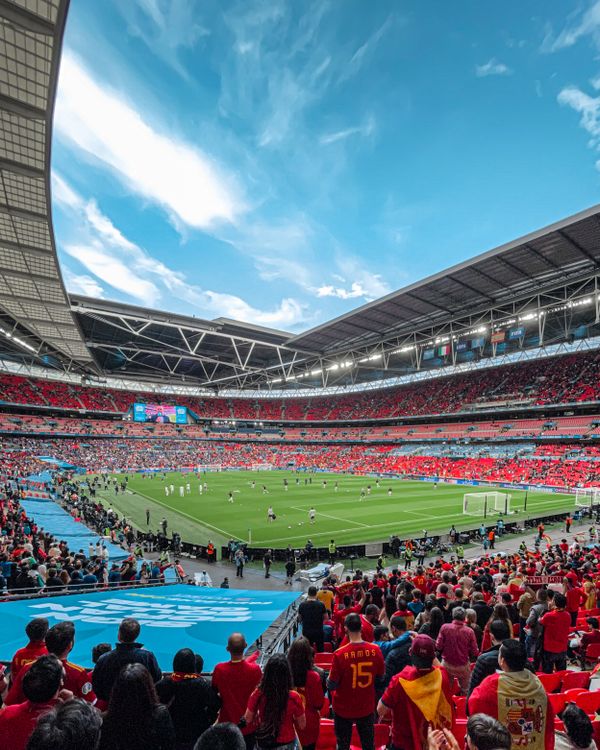
The 2026 FIFA World Cup introduced the biggest format shake-up in the tournament’s history, expanding from 32 to 48 teams. With the competition already underway across the United States, Mexico, and Canada, here is a breakdown of how the new format works and the road each team must travel to reach the final at MetLife Stadium.

48 Teams, 12 Groups of Four

Instead of the previous 32-team, eight-group structure, this tournament splits 48 nations into 12 groups of four, labelled Group A through Group L. The expanded format guarantees at least three matches for every team during the group stage, giving smaller footballing nations a genuine chance to make a mark on the world stage.

A New Knockout Stage: Round of 32

The biggest structural change is the addition of a Round of 32. The top two teams from each group advance automatically, joined by the eight best third-placed teams across all 12 groups. This new round adds extra jeopardy and drama before the tournament reaches its more familiar knockout shape.

Soccer ball on the pitch during a World Cup match
Pexels / Free to use

104 Matches Over 39 Days

The expanded format means a total of 104 matches will be played, up from 64 in the previous 32-team edition. The tournament runs across 39 days, giving fans a longer, more drawn-out festival of football than any World Cup before it.

The Road to the Final

After the Round of 32, the tournament moves into a familiar Round of 16, followed by quarterfinals, semifinals, a third-place match, and finally the championship match at MetLife Stadium in New Jersey. Every stage narrows the 48-team field until a single champion is crowned.

  • Group stage: 12 groups of 4 teams
  • Round of 32: newly added knockout stage
  • Round of 16, quarterfinals, and semifinals follow
  • 104 total matches across the tournament
  • Final hosted at MetLife Stadium, New Jersey
Fans celebrating in the stands at a World Cup stadium
Pexels / Free to use

Images used in this article are sourced from Pexels and are free to use under the Pexels License. Match schedules and results reflect the tournament as it is currently being played and may be subject to official updates.

FIFA World Cup 2026 Host Cities and Stadiums Guide

The 2026 FIFA World Cup is being staged across an unprecedented 16 host cities spanning three countries, the United States, Mexico, and Canada. With the tournament already underway, fans are travelling between iconic stadiums old and new, from a historic arena that hosted finals decades ago to brand-new NFL venues built for record crowds. Here is a guide to the grounds shaping this expanded 48-team tournament.

The Final: MetLife Stadium

MetLife Stadium in East Rutherford, New Jersey, has the honor of hosting the tournament final. Home to the NFL’s Giants and Jets, the venue has been upgraded with a natural grass surface for the tournament and can seat more than 82,000 spectators for the marquee match.

Marquee US Venues

AT&T Stadium in Arlington, Texas, is one of the largest venues in the competition, with a retractable roof and capacity above 94,000. Mercedes-Benz Stadium in Atlanta and SoFi Stadium in Los Angeles bring cutting-edge design and premium fan experiences, while Hard Rock Stadium in Miami and Levi’s Stadium in Santa Clara round out marquee West and East Coast hosting duties. Additional US matches are being played in Houston, Kansas City, Boston, Philadelphia, and Seattle, giving American fans coast-to-coast access to the tournament.

Soccer stadium packed with fans during a World Cup match
Pexels / Free to use

Mexico’s Historic Estadio Azteca

Estadio Azteca in Mexico City holds a special place in football history, having already hosted two World Cup finals in 1970 and 1986. Becoming the first stadium to host matches across three separate World Cups, it anchors Mexico’s hosting duties alongside Estadio Akron in Guadalajara and Estadio BBVA in Monterrey.

Canada’s Modern Hosts

Canada is co-hosting World Cup matches for the first time, with BC Place in Vancouver and BMO Field in Toronto welcoming international fans. Both venues have been renovated in recent years, and Toronto’s expanded capacity has made it a lively hub for supporters throughout the group stage and knockout rounds.

  • 11 host cities in the United States
  • 3 host cities in Mexico
  • 2 host cities in Canada
  • 16 total stadiums across the tournament
Fans celebrating in the stands at a World Cup stadium
Pexels / Free to use

Images used in this article are sourced from Pexels and are free to use under the Pexels License. Schedule and venue details reflect the tournament as it is currently being played and may be subject to official updates.
Biggest Upsets and Cinderella Stories of the World Cup 2026 So Far

The FIFA World Cup 2026 expanded to 48 teams for the first time, and that bigger stage has already produced some of the most memorable underdog stories in tournament history. From debutant nations toppling giants to fancied contenders crashing out early, here is a look at the biggest upsets and Cinderella runs so far.

Cape Verde’s Historic Debut

Cape Verde qualified for its first-ever World Cup, a remarkable achievement for the small island nation. The team topped their qualifying group, including a commanding 3-0 win over Eswatini, and carried that momentum into the tournament, capturing neutral fans everywhere with their fearless style of play.

Nigeria’s Stunning Upset Over Spain

Few results shocked the football world like Nigeria’s 3-2 win over Spain, a side ranked more than 50 places above them. The Super Eagles backed it up with a gritty 1-0 win over Bulgaria, proving that the win was no fluke and putting the rest of the tournament on notice.

Football players competing for the ball during a match
Pexels / Free to use

Curacao’s Cinderella Run

As one of the smallest nations ever to qualify, Curacao’s very presence at the World Cup was already historic. Their scrappy, disciplined performances in the group stage turned heads, and every point they picked up felt like a fairy tale chapter for a footballing minnow on the world’s biggest stage.

Uruguay’s Early Exit

Not every story was about the underdogs rising. Uruguay, managed by Marcelo Bielsa and considered a dark horse to go deep, were eliminated without registering a single win, a sobering reminder that reputation counts for little once the whistle blows.

Soccer ball resting on grass under stadium lights at night
Pexels / Free to use

Why Upsets Matter in an Expanded Format

With 48 teams instead of 32, more nations than ever have a genuine shot at reaching the knockout rounds, and that has made shocks more frequent and more meaningful. These stories of underdogs and fallen giants are exactly what organizers hoped the expanded format would deliver, and they have already made World Cup 2026 one of the most unpredictable editions in memory.

Images used in this article are sourced from Pexels and are free to use under the Pexels License. Match results and storylines referenced are based on the ongoing tournament and public reports, and details may evolve as the competition continues.

World Cup 2026 Golden Boot Race: Mbappe, Messi and Haaland Chase the Top Scorer Crown

As the 2026 FIFA World Cup moves into its knockout rounds, the race for the Golden Boot is heating up. With the tournament’s expanded 104-match schedule giving strikers more chances than ever, here’s where the race for top scorer currently stands.

Current Leaders

Kylian Mbappe and Lionel Messi currently sit tied at the top of the scoring charts with six goals apiece, setting up one of the most compelling individual duels of the tournament. Both players have carried heavy creative and finishing burdens for their national teams throughout the group stage and into the knockouts.

Players challenging for the ball during a soccer match
Pexels / Free to use

The Chasers: Haaland and Kane

Erling Haaland and Harry Kane trail just behind on five goals each, both known for their clinical finishing and capable of closing the gap quickly in a single big match. A hat-trick from either forward in the quarterfinals could instantly reshape the entire race.

Why the Knockout Stage Matters

Unlike the group stage, where weaker opponents can inflate scoring totals, knockout matches tend to be tighter and more defensively organized, meaning goals are harder to come by. Players who keep scoring through the Round of 16, quarterfinals, and semifinals typically separate themselves from the pack by the final.

Football fans cheering enthusiastically in a stadium
Pexels / Free to use

What to Watch For

With only a handful of matches remaining for any given team, every remaining fixture now carries huge weight in the Golden Boot race. Penalty kicks, set pieces, and a team’s overall run to the final all factor heavily into who ultimately finishes on top.

Images used in this article are sourced from Pexels and are free to use under the Pexels License. Goal totals reflect reporting available at the time of publication and are subject to change as matches are played.

FIFA World Cup 2026 Round of 16: Full Schedule, Dates and Matchups

The 2026 FIFA World Cup has reached its knockout rounds, and the expanded 48-team format means fans get an extra stage of drama this year: the Round of 16. Here is how the bracket has taken shape and what to expect as the tournament heads toward the final at MetLife Stadium.

How the Round of 16 Works

With 48 teams split into 12 groups of four, the top two finishers from each group advanced automatically, joined by the eight best third-placed teams to fill out a 32-team knockout bracket. That round of 32 has now been played, trimming the field down to the 16 teams competing in this stage.

Players competing for the ball on a soccer field
Pexels / Free to use

Notable Round of 16 Matchups

Among the headline fixtures reported for this stage are Canada facing Morocco, Paraguay taking on France, Brazil against Norway, Mexico versus England, and Portugal meeting Spain in an all-Iberian clash. Each of these ties carries major stakes, with several traditional heavyweights facing surprise package sides that overperformed in the group stage.

Key Dates to Watch

  • Round of 16: July 4 – July 7, 2026
  • Quarterfinals: July 9 – July 11, 2026
  • Semifinals: July 14 – July 15, 2026
  • Third-place playoff: July 18, 2026
  • Final: July 19, 2026 at MetLife Stadium, East Rutherford, New Jersey
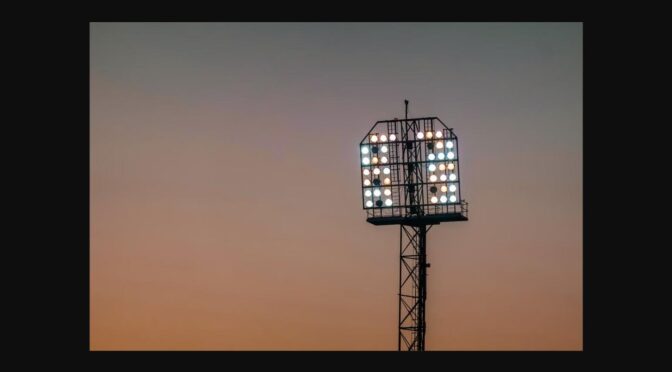
Stadium floodlights glowing against a twilight sky
Pexels / Free to use

What Comes Next

Winners from the Round of 16 move on to the quarterfinal stage, played across venues in both the United States and Mexico before the semifinals shift to their designated host stadiums. With this being the first 48-team World Cup, every round from here carries extra weight, since teams are now just three wins away from a place in the final.

Images used in this article are sourced from Pexels and are free to use under the Pexels License. Match details reflect reporting available at the time of publication and may be updated as results are confirmed.

Lionel Messi – Broken man in Fifa World Cup 2018

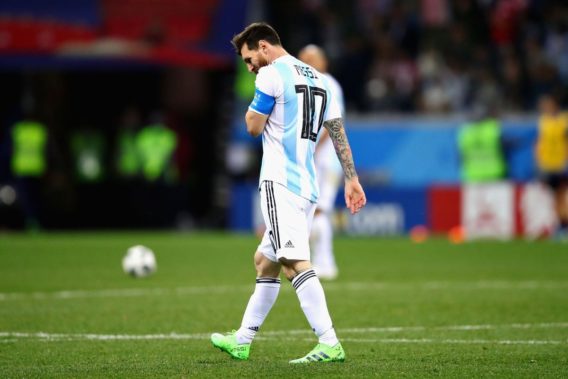
After loss to Croatia, Lionel Messi is a man with broken heart. Argentina are not out of the World Cup yet – they could yet qualify with victory over Nigeria in their final group game next, but on and off the pitch they look in trouble.

Continue reading Lionel Messi – Broken man in Fifa World Cup 2018