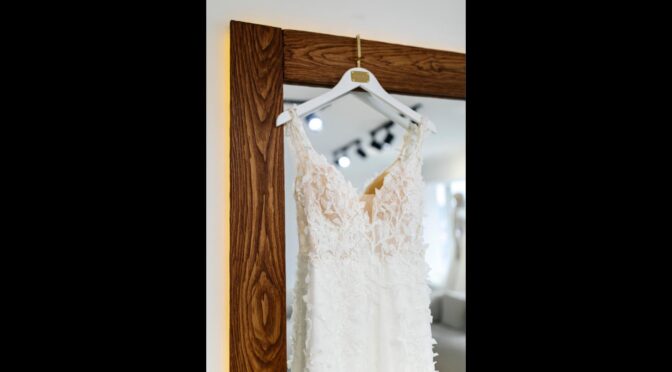
Walk into any bridal boutique and you’ll hear the same handful of fabric names again and again: satin, lace, tulle, chiffon, organza. They’re often used almost interchangeably in casual conversation, yet each one behaves completely differently on the body, photographs differently, and suits a different kind of wedding. Knowing the difference before your first fitting can save hours of trying on dresses that were never going to work for your venue or your figure.
This guide breaks down the fabrics you’re most likely to encounter while dress shopping, what makes each one distinct, and how to match fabric choice to season, silhouette, and budget.
Why Fabric Matters More Than You’d Think
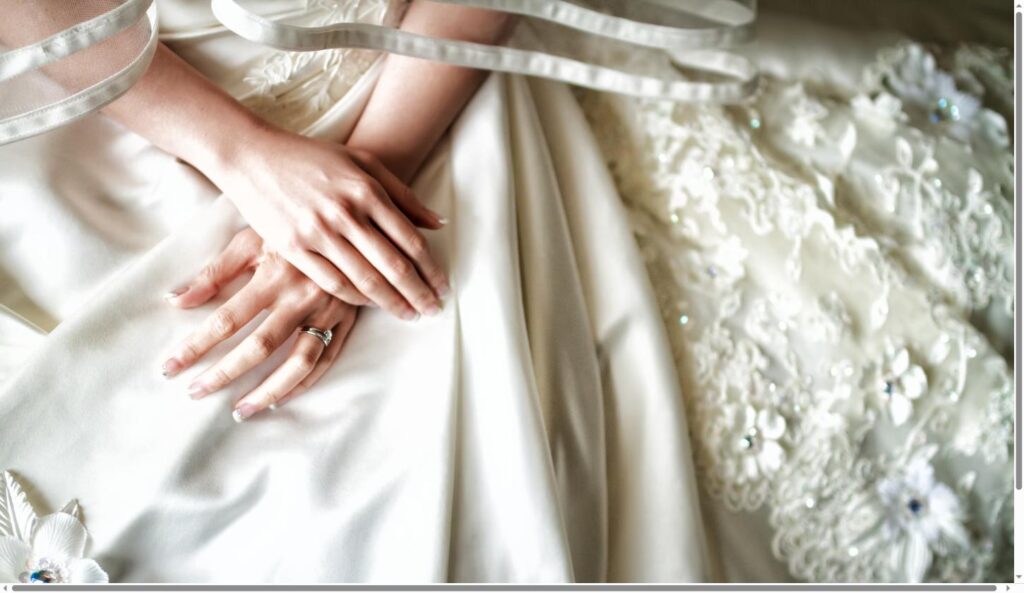
Two dresses can share an identical wedding dress silhouette and still look and feel completely different once you factor in fabric. A structured mermaid cut in heavy satin clings and sculpts, while the same silhouette in soft crepe drapes and skims. Fabric also determines how a dress handles heat, movement, and long hours of wear, which matters far more than most brides expect on the actual day.
Satin: The Classic, Structured Choice
Satin is defined by its weave rather than a specific fiber, which is why you’ll see silk satin, polyester satin, and duchesse satin all sold under the same general name. It has a smooth, lustrous front face and a matte back, and it holds structure well, which is why it’s the go-to fabric for ball gowns and fitted silhouettes that need to hold their shape.
- Best for: Structured silhouettes, formal and evening weddings, cooler seasons.
- Feel: Smooth, with noticeable weight and body.
- Watch out for: It can show wrinkles and water spots more visibly than matte fabrics.
Lace: Romance and Texture
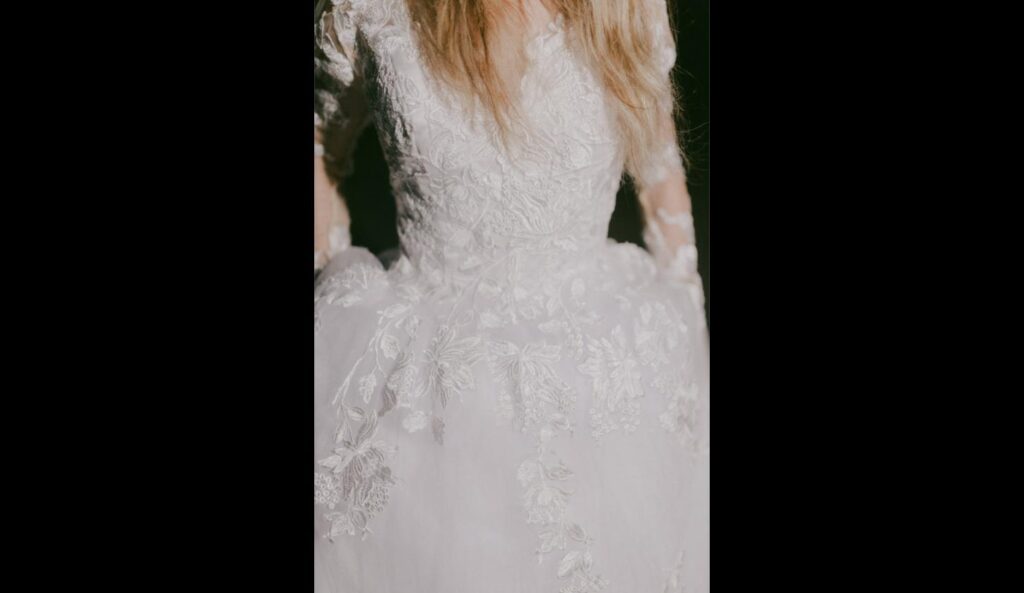
Lace is less a single fabric than a family of techniques, ranging from delicate Chantilly lace with its fine floral motifs to heavier, more graphic guipure lace. It’s almost always layered over another fabric such as tulle or a satin slip, since lace alone isn’t opaque or structured enough to stand as a gown on its own.
Common Lace Types
- Chantilly lace: Delicate, scalloped edges, often used for sleeves and overlays.
- Alençon lace: Corded outlines that give a slightly raised, defined pattern.
- Guipure lace: Bold, three-dimensional motifs without a net background.
Tulle: Volume Without Weight
Tulle is the fine netting responsible for full ball gown skirts and cathedral-length veils alike. Because it’s so lightweight, it can be layered many times over to create dramatic volume without making a dress heavy or difficult to move in. It’s also the most breathable option on this list, which makes it a favorite for warm-weather weddings.
Chiffon and Organza: Soft Movement
Chiffon is sheer, lightweight, and flowing, giving dresses a soft, almost weightless movement that works beautifully for beach and garden ceremonies. Organza is chiffon’s crisper cousin: still sheer, but with more body and a subtle stiffness that holds gentle shape in sleeves, overskirts, and bows.
Fabric Comparison at a Glance
| Fabric | Weight | Best Season | Typical Use |
|---|---|---|---|
| Satin | Heavy | Fall / Winter | Structured gowns, fitted silhouettes |
| Lace | Light–Medium | Any season | Overlays, sleeves, bodices |
| Tulle | Very light | Spring / Summer | Full skirts, veils, volume |
| Chiffon | Very light | Summer | Beach and garden gowns |
| Organza | Light, crisp | Spring / Fall | Structured overskirts, bows |
Matching Fabric to Your Venue
A rule of thumb that rarely fails: the more formal and enclosed the venue, the more structure and weight a fabric can carry. A cathedral or ballroom can support the drama of heavy satin and layered tulle, while a beach or garden ceremony almost always looks and feels better in chiffon or lightweight lace that moves with the breeze instead of fighting it.
Caring for Different Fabrics
Fabric choice also affects how a dress should be stored and cleaned after the wedding. Delicate lace and sheer chiffon are more prone to snagging and yellowing than sturdy satin, so it’s worth understanding how to preserve your wedding dress correctly for the specific fabrics used in your gown well before the big day arrives.
Frequently Asked Questions
Is silk satin worth the extra cost over polyester satin?
Silk satin has a softer sheen and better drape, but high-quality polyester satin has improved significantly and photographs almost identically in most lighting. The choice usually comes down to budget and how the fabric feels against the skin.
Which fabric is best for a hot outdoor wedding?
Chiffon and lightweight lace breathe far better than heavy satin and are usually the most comfortable choices for summer ceremonies.
Does lace need a lining?
Almost always. Lace on its own is typically sheer, so it’s layered over a lining or slip in a matching or contrasting fabric.
Can different fabrics be combined in one dress?
Yes, and it’s extremely common. A satin bodice with a tulle skirt, or a lace overlay on a chiffon base, are both popular combinations that use each fabric’s strengths.
Summary
Satin brings structure, lace brings romance and texture, tulle brings volume, and chiffon and organza bring soft movement. None of them is objectively “better” than the others; the right choice depends on your venue, the season, and the silhouette you’ve already fallen in love with.
Conclusion
Next time you’re standing in a fitting room surrounded by gowns, take a moment to actually touch and compare the fabrics rather than judging by silhouette alone. Understanding what you’re feeling, and why it behaves the way it does, makes the entire dress-shopping process faster and far less overwhelming.